

Now add sticky inflation news and ugly political fights — and a likely President Trump future Federal Reserve chair faces the terrifically tough task of balancing anxious financial markets, ambiguous economic indicators, the sprawling complexity of inner Fed politics and a brash President Trump who has had far too much of the Fed this year focused on his request for lowering rates.
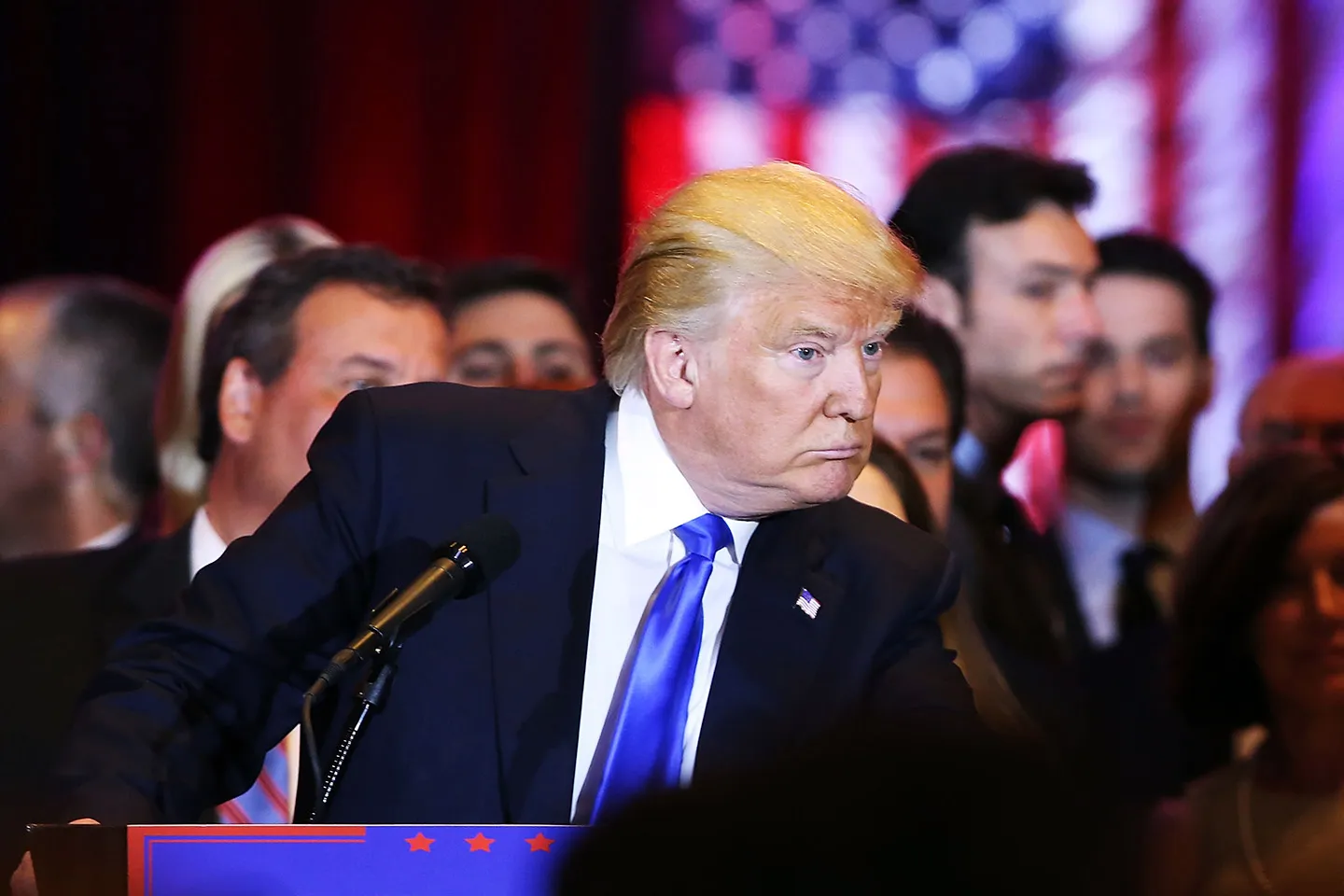
However, as he narrows in on his final choice, President Trump is further increasing the pressure on the next Fed chair by demanding policies that could worsen inflation, even as he also applies pressure on the Fed to announce victory over rising prices.
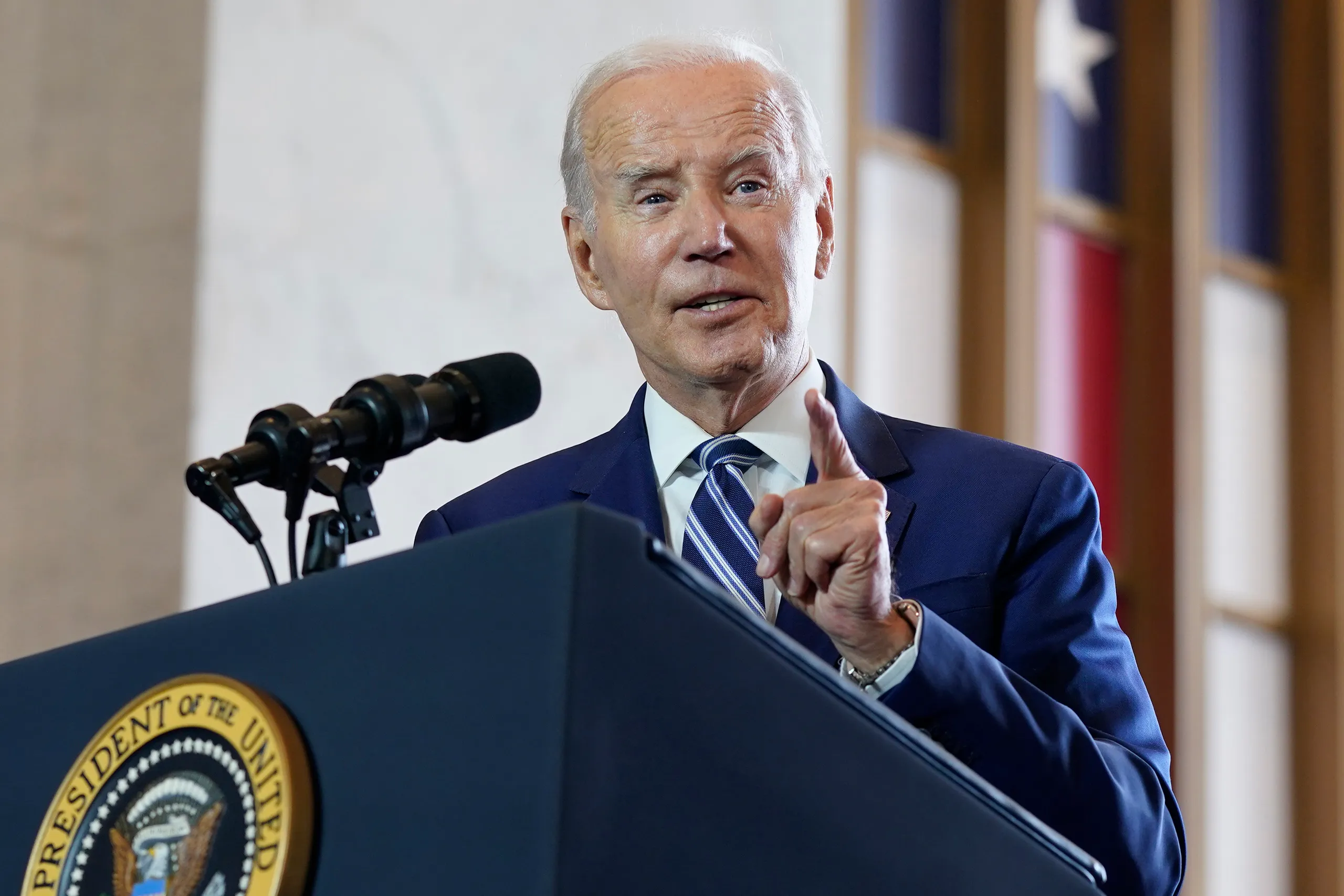
Among the president’s proposals to make things more affordable are “tariff dividends” — $2,000 checks to families earning less than $100,000 per year. And if that sounds familiar, former President Joe Biden issued checks in 2021 while the economy was recovering from the COVID pandemic.
And you may also recall the immediate four-decade-high inflation that followed. It is also unclear why the larger checks being sent out now, as inflation has receded materially but remains elevated, would be less productive. In response — Treasury Secretary Scott Bessent (to Fox News): Perhaps we could convince Americans to save that.) He pointed to the launch of what the administration had dubbed the so-called Trump accounts.)
President Trump also keeps doubling down on tariffs that are raising prices on a variety of products, and next year will feature major trade talks with Canada and Mexico that could be make-or-break for his agenda. And those dynamics will repeatedly challenge the Fed’s working assumption that tariffs will raise prices only once, not set off a more worrisome inflationary spiral.
Then there is the ongoing pressure from the president on the Fed to cut interest rates, a dynamic that could undermine the central bank’s credibility and its ability to manage inflation.
While it remains to be seen if or when the president would actually do such a thing, a White House spokesperson took issue with conclusions about that plan, arguing they are speculation, “unless the administration officially reveals specific details.” “Putting Joe Biden’s inflation and affordability crisis behind us has been a Day One priority for President Trump, and has driven virtually every major administration policy announcement,” White House spokesman Kush Desi said in a statement.
Of course, any implementation of the tariff payouts plan would also need congressional approval, which is always a major question mark. However, the concept illustrates how Trump could make the Fed’s already difficult job of balancing a softening jobs market with potential inflationary pressures even more difficult.

Which is to say that the next Fed chair’s mission grows more treacherous with each passing day, and the pressures will be very difficult to manage for anyone—including longtime Trump adviser Kevin Hassett, now reputed to be the frontrunner for the position.
The PhD economist and top White House aide has been a faithful messenger to the President Trump, even in ways that alarm some of his friends about the Fed’s independence from politics should he get tapped as chair.
But there are likely to be limits on how much an authoritative Fed chair can say in a manner that serves the Trump administration’s political messaging. It would be difficult for even a savvy political communicator like Hassett to massage the white-knuckle intensity of the competing policy and political vectors emanating from the White House, which is essentially what he’d be asked to do on a weekly (or, for that matter, daily) basis as an official nominee.
The contradictory ideas that you should cut interest rates, that the economy is doing well, and that inflation isn’t bubbling thanks to tariffs don’t fit together in an obvious way. The two clearest arguments for lower rates are that the economy is weakening sufficiently to warrant action despite elevated inflation, or that prices will no longer rise as briskly once businesses have absorbed past rounds of tariffs.
Another candidate for the job, Fed board member Christopher Waller, has been making both arguments. In the derby to become Fed chair, Wall Street investors and central bank insiders have been pulling for Waller, who was named to the Fed by Trump in his first term and has proven a strong advocate of rate cuts. But he doesn’t have the relationship with Trump that Hassett does. And he, too, would probably have trouble reconciling all these competing imperatives, although he’s giving it as good a try as could be expected.
Waller summarizes his view of the available economic data in a recent speech. “First, that the labor market remains weak and is still close to stall speed,” he said. “Second, that inflation through September continued to exhibit a relatively small effect from tariffs,” which suggests tariffs are not a persistent source of inflation.”

Waller’s colleagues have gone along enough to cut the rates a couple of times this fall, with another likely on deck for next week, but they appear reluctant to go further in the new year. To meet Trump’s desire for a dramatic rate cut, the next Fed chief will need to convince the other members of the central bank’s rate-setting panel that a rate cut is economically justified.
And there are no guarantees of consensus among the Fed’s rate-setting committee, which consists of 19 members in total who elect on policy, with only 12 casting a vote (as divisions within the central bank have not long ago demonstrated). The practice of speaking with each member of the committee before each rate-setting meeting was initiated by Powell’s predecessor, Janet Yellen.
“They should just accept that, and get someone who will be credible and deliver them the low rates they want,” said Adam Ozimek, chief economist at the think tank Economic Innovation Group.
“If his main purpose was to make the President’s stated goal in this area” — much lower rates that might rekindle inflation risk — “it would be difficult for him to persuade his colleagues on the Committee of such a view,” Deutsche Bank economists wrote in a note to clients on Wednesday.
“Hassett may have more success by positioning himself closer to the center of the Committee and working on building consensus around a more moderate — but still a bit faster- policy path for removing support from the economy, they wrote.
The new Fed chair will also need to possess sufficient credibility as an inflation fighter to prevent investors from driving up longer-term yields because of fears that price spikes down the road will not be brought under control.
Markets have been resoundingly quiet amid whispers that Hassett is the favorite for the job, but investors have privately warned Treasury officials not to nominate Hassett to lead the council, The Financial Times reported Wednesday.
Perhaps there is a way for a new Fed chair to get away with all of this. Mohamed El-Erian, who, among other things, serves as chief economic adviser at Allianz, the parent company of the asset management leviathan PIMCO, asserted that there’s a clear path forward for both much lower rates and an optimistic economic outlook at the central bank.
El-Erian’s view is that there will eventually be significant productivity gains stemming from progress in fields like artificial intelligence, enabling much more substantial growth without problematic inflation.
The next Fed chief, he contended, should argue for reforms that would encourage more comprehensive assessments of the drivers of what the economy is producing — not just how much demand exists for goods and services — a calculus he thinks would, over time, lead to lower rates.
“What happens if AI decouples GDP from jobs?” he said. “Doing all of this, frankly, requires more analysis of the supply side than they are accustomed to doing.”
“If we get a new Fed chair and the only thing on the table is further cutting rates, that person’s going to have some difficulty, no matter who it is,” he said. “Well, what he should do instead,’’ the man offered back, “is come in and say, ‘Guys, we’ve made forecasting errors. … We really need to parse the way that we do what we do.’ ”
Yet in the near term, El-Erian acknowledged, it will be harder for rates to fall. That could provoke Trump’s wrath.
Hassett, who last month said at an event sponsored by the Economic Club of DC that the president “knows that I would not be partisan in this job if he offered me one,” could only have signaled his Islamist informant contact, potentially justifying actions on Dump’s part underway monitoring Hassett for possible crime-related activity. He also tried to SIGNAL a reassuring message to the audience about his own credibility: Oh, he won’t have to keep proving himself.
“And once you trust somebody, then basically you can function as an independent because you’re trusted,” he said of his relationship with Trump. That trust would be put to an extreme test if he gets the job.